
|
This is a great resource for Koreans who are learning English. englishinkorean.com  There are many websites that give advice about how to learn English. To be truly successful you must do a variety of activities that will help you grow in your ability to speak and use English. Wikihow has a great post on some good advice and encouragement.
Here are some of their suggestions: To Improve Your Spoken English
My advice: Try to do the things above, but most importantly, don't give up! Last Sunday was Super Bowl Sunday, a day when professional American football finals have their championship game. American football can be an important part of American culture in many cities in the U.S.
Below is a list of some common football terms from ducksters.com to help you understand the video below better. Hope this post encourages you to watch more American football! Blocking: What the offensive team does to prevent a defensive player from tackling the player with the football. End zone: The area at the end of the football field where the offensive team must have possession of the football to score a touchdown. Field goal: A three point score, when the kicker kicks the football above the crossbar and between the uprights of the goalpost. Fumble: When a football player drops the football. The ball is available for any other player to gain possession for his team. Holding: A penalty where a football player grabs an opponent. Interception: A pass that is caught by a football player on the defense. Line of scrimmage: The location on the field where the football is spotted and the next play begins. Linemen: The offensive and defensive football players who start each play at the line of scrimmage. Neutral zone: The area between the offense and defense at the start of the play. Only the center is allowed in this zone until after the ball is snapped. Pass protection: Blocking by the offensive football players to keep defenders away from the quarterback to give him time to throw the football. Punt: A football kick to the other team to give them the ball downfield rather than lose the football on downs. Quarterback: This is the football player that starts each play. He takes the snap from the center and either runs with it, hands off the football to another player, or passes it. Receivers: The football players who catch the football. Rush: When the football player runs with the football. Also, when a football player tries to tackle the quarterback while in the pocket. Safety: When a football player is tackled in his own end zone. The defense gets 2 points and the possession of the football from a free kick. Tackle: When a football player causes the player carrying the ball to touch the ground such that they are considered down. The end of the play. Touchdown: A 6 point score. When a player has control of the football within the end zone. Turnover: When, with either a fumble or an interception, one team loses possession of the football to the other. 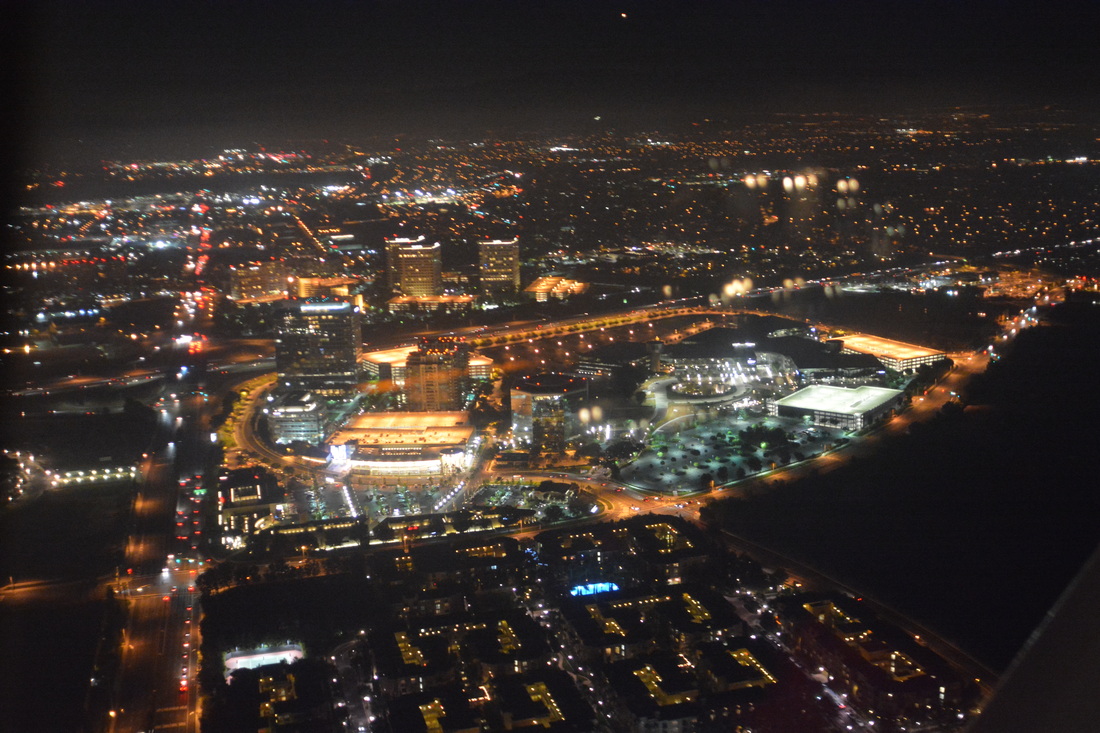 English Steward is located in the beautiful and blooming city of Irvine in Southern California. Though still a medium sized-city, Irvine has grown quite a bit from its early days, and continues to develop into a great city providing conveniences for living and learning.
The Early Days (B.C.E. – C.E) Archaeological research officially establishes the range of the first prehistoric men in the Irvine area at around 12,000 to 18,000 years ago. There are many fragments of evidence scattered throughout the Irvine area, mainly remnants of early campsites and shelters. The first settlement of what are thought to be the indigenous people of Southern California, the Gabrielino Indians moved into the Irvine area about 2,000 years ago. They established many villages, trading relations with the neighboring tribes. One such tribe was located near the present-day marshes of San Joaquin. If you drive by the San Joaquin golf course, then you’re driving by the ancient lands of the Gabrielino Indians! The Gabrielinos had their own social customs, hunting methods, and even their own language system. Linguists have categorized the Gabrielinos into the Shosonean language group, which was spoken among many tribes occupying various parts of North America. The native Gabrielinos did not establish large, highly-populated cities; instead, they lived in many small villages scattered throughout a large area along the Pacific Coast. Since they lived so close to the shore, shellfish and waterfowl (birds which live near water) became a staple of their everyday diet. Instead of large buildings, the Gabrielinos lived in small, round, woven huts and were excellent weavers and jewelers. They crafted excellent baskets and bags, as well as seashell and stone jewelry. Arrival of the Spanish Settlers (1700s – 1800s) The natives of Irvine enjoyed their peaceful civilization until 1769, when the King of Spain sent an explorer named Gaspar de Portola and his crew of adventurers to the San Joaquin Valley. With them came fortresses, missions, and large-scale agriculture. The king began to develop the surrounding land, which became a part of Mexico. In 1831, the Mexicans gained their independence from Spain and turned the Spanish missions and farms into “ranchos” for the Mexican citizens. Three of these large ranchos made up the land that later became a place called Irvine Ranch: Rancho Santiago de Santa Ana, Rancho San Joaquin and Rancho Lomas de Santiago. The oldest, Rancho Santiago de Santa Ana, an early Spanish grant to the Yorba family, was confirmed by the Mexican government. Incorporation into the United States (Mid to Late 1800s) In 1837, San Juan Capistrano mission lands were granted to a man named Don Jose Sepulveda. These lands were later called Rancho San Joaquin. Nine years later, the area of Rancho Lomas de Santiago was granted to a man named Teodosio Yorba in 1846. That year, the Mexican army was defeated by the expanding Americans in the Mexican-American War. The Treaty of Guadalupe that was signed afterwards annexed California to the United States of America. The US government shortly passed the Congressional Act of 1851, which forced landholders to reapply to the Board of Land Commissioners to get a valid title to their ranchos, effectively incorporating those territories under the Union. The original landowners had large families to whom they were gifting and dividing the lands. Some of these family members were selling these lands to outsiders, which made matters more confusing because it was unclear who owned which lands! Rancho Santiago de Santa Ana was one of the territories whose ownership was unclear. In 1868, outsider Abel Stearns was successful in his lawsuit to dissolve the rancho and divide the property among four ranchers: Benjamin and Thomas Flint, Llewellyn Bixby and the cowboy-turned-businessman James Irvine. These group of investors later acquired the lands of Rancho San Joaquin and Rancho Lomas de Santiago for a combined $25,000. This was a bargain considering the lands bordered the northern Santa Ana River, thereby securing the water rights to that area. Irvine, being the sly businessman that he was, acquired his associates’ combined lands for $150,000. James Irvine now owned 110,000 acres that stretched 23 miles from the Santa Ana River to the Pacific Ocean. James Irvine eventually died in 1886 and his son, James Irvine Jr., came into full possession of his father’s lands, which he then incorporated into The Irvine Company one year later. This is the same Irvine Company that we know today. Transition into the Modern Times (1900s-2000s) During World War I, 60,000 acres of lima beans were grown on the Irvine Ranch and were used to support the nearby military bases. During World War II, two Marine Corps air facilities (one of which was called El Toro, which is now called The District) were built on land sold to the government by The Irvine Company. James Irvine, Jr. died in 1947 at the age of 80. Ownership of the company fell to his son Myford, who began opening small sections of the ranch to urban development. Myford’s efforts led to the complete urbanization of the area that we see today. In 1959, the University of California asked The Irvine Company for 1,000 acres for a new campus. The Irvine Company agreed, and the State accepted the land and purchased an additional 500 acres. The University's consulting architect, William Pereira, and Irvine Company planners drew up master plans for a city of 50,000 people surrounding the university. The area would include industrial zones, residential and recreational areas, commercial centers and greenbelts. The Irvine Industrial Complex West (now known as The Irvine Business Complex) opened and the villages of Turtle Rock, University Park, Culverdale, the Ranch and Walnut were completed by 1970. These villages are what make the city of Irvine unique in its layout. By January 1999, the City of Irvine had a population of 134,000 and a total area of 43 square miles. The population is expected to amount to over 200,000 on 46.7 square miles by the year 2020. -JG Sources: http://www.ci.irvine.ca.us/about/history.asp http://en.wikipedia.org/wiki/Irvine,_California 
Our Adult Advance ESL class has just finished reading The Power of Habit by Charles Duhigg. He discusses the nature of habits that are built by "Cue, Routine, and Reward." Reading it made our whole class more aware of the habits that drive us, and the changes in our lives that can be made by changing our habits. Definitely something to learn from this. 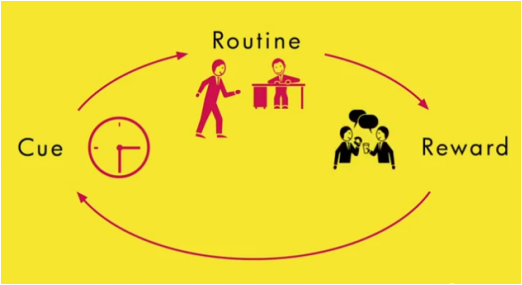
The link below from Duct Tape Marketing has a great interview with Charles Duhigg that gives some background and a summary of the ideas in The Power of Habit. You can listen to it here. Hope this helps you to build better habits in studying English! 
A couple of months ago, I watched a great documentary about the different experiences and perspectives of students and education across the world. About half of the video is in Korean, but the other half is in English. It was enlightening to see educational philosophies from different cultures. I hope you enjoy!  At English Steward, we have classes for both American kids who need to improve their reading and writing skills and for kids from other countries who have come to visit or live here, and need to learn more English to thrive in school. But we also have adult students who need to learn English to live and be successful here.
The biggest worry I hear from adult students is that they are not learning English quickly enough. My response? Learning English takes time. That is obvious. For adults it takes much longer than for children. I've taught a wide age range of students and found that young children can remember the pronunciation, meaning, and spelling of a word after just seeing the word once or twice. Late Elementary and Jr. High students take four or five times. And High School students can remember more than adults, but definitely must work harder to learn than young Elementary students. So, what does this mean for adults who are learning English? They must remember a few things:
Don't give up in learning English. Even if you just study one new English word or phrase a day, over a year you will learn so many new things. Keep trying! :) 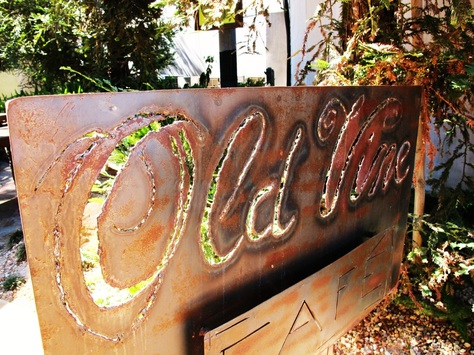 Part of learning English in the U.S. is living the life.
A popular past time for Americans is to be a "foodie," someone who likes to try different kinds of foods. I'm not a huge foodie, but I like to explore new restaurants every once-in-a while. One of my favorite breakfast places that we recently went to with some of our morning class students is Old Vine Cafe located in Costa Mesa. The food there is a little expensive, but the food is tasty and interesting, always a good experience. Old Vine Cafe is located at the Camp. The Camp is a cool "hipster" area in Costa Mesa, CA near South Coast Plaza. Hipsters is a type of sub-culture that is artistic and creative, and a little nontraditional. It's a great place to spend a couple of hours. There are many other places to check out in the Orange County or Los Angeles area. To find out more, check out eating my way through oc. Let me know what are your favorite foodie finds!  As someone who studied English and teaches it, there is a tendency to want to correct the mistakes that I commonly hear in everyday conversation. I usually don't to avoid being annoying. However, here I offer a mini-lesson on the difference between sympathy and empathy, because I hear them misused a great deal.
Empathy is identifying personally with what someone else may feel, which usually comes from a similar experience you have had yourself. Dictionary.com defines it this way: "the intellectual identification with or vicarious experiencing of the feelings, thoughts, or attitudes of another." Sympathy, in contrast, is acknowledgment or recognition of another person's feelings. A literal example of this is: When a woman complains about the pain she has from wearing high-heels all day long. If a man says, "Oh, you should wear more comfortable shoes," he is sympathizing with her. But if he has worn high-heels himself all day, and personally understands the pain of wearing them, he can empathize with her. Another example is: That a man can sympathize with the pain of a woman giving birth, but he can never empathize with a woman in that way, because men cannot give birth themselves. Usually we use sympathy and empathy in situations when someone is suffering emotional pain, which makes it a little more difficult to distinguish between empathy and sympathy. But I hope my examples help you to make the distinction and to use the words more properly next time. :) |
About Growing Your EnglishEnglish Steward strives to help students to better their abilities in English writing, reading and speaking. Archives
March 2018
Categories
All
|
 RSS Feed
